Florida’s ‘First Thanksgiving’ Came 56 Years Before Plymouth
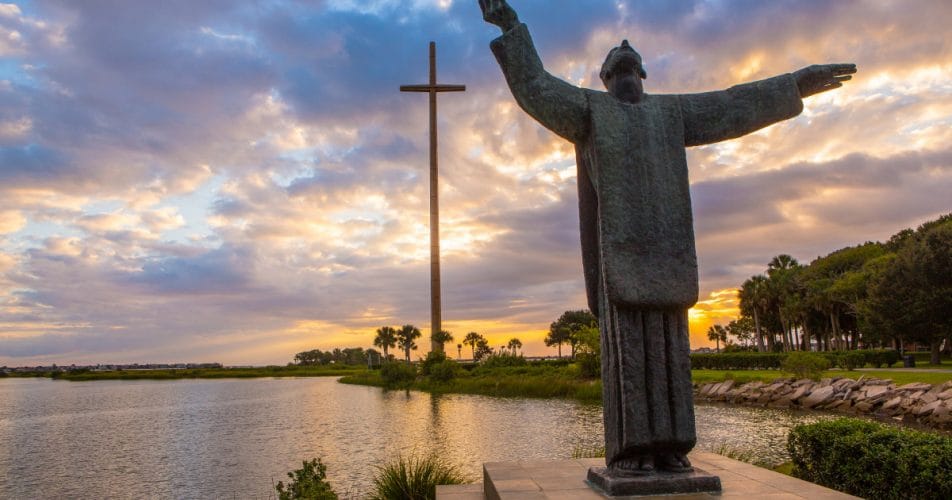
FLORIDA — More than half a century before the Pilgrims gathered at Plymouth, Spanish colonists in Florida marked their arrival in St. Augustine with a Christian service of thanksgiving and a meal shared with Native people.
The gathering took place Sept. 8, 1565, after Pedro Menéndez de Avilés and his expedition arrived at what would become St. Augustine. The late Florida historian Michael Gannon identified the event as the first Thanksgiving in what is now the United States, 56 years before the better-known 1621 Plymouth celebration.
Historian Kevin Kokomoor, author of La Florida: Catholics, Conquistadors and Other American Origin Stories, recently discussed the event in an interview with the Florida Historical Society for Florida Frontiers Radio Program #653, which aired Nov. 20.
“The sources are pretty scarce for both of them,” Kokomoor told Florida Frontiers, referring to both the St. Augustine and Plymouth Thanksgiving traditions. Records of the Plymouth account are contained in only a handful of sparse passages. The surviving St. Augustine account amounts to only a brief sentence indicating that Menéndez gave thanks and fed Native people.
Other records, however, provide helpful context. The Spanish expedition had been charged by King Philip II with both military and missionary responsibilities, including bringing clergy to instruct Native people in the Catholic faith.
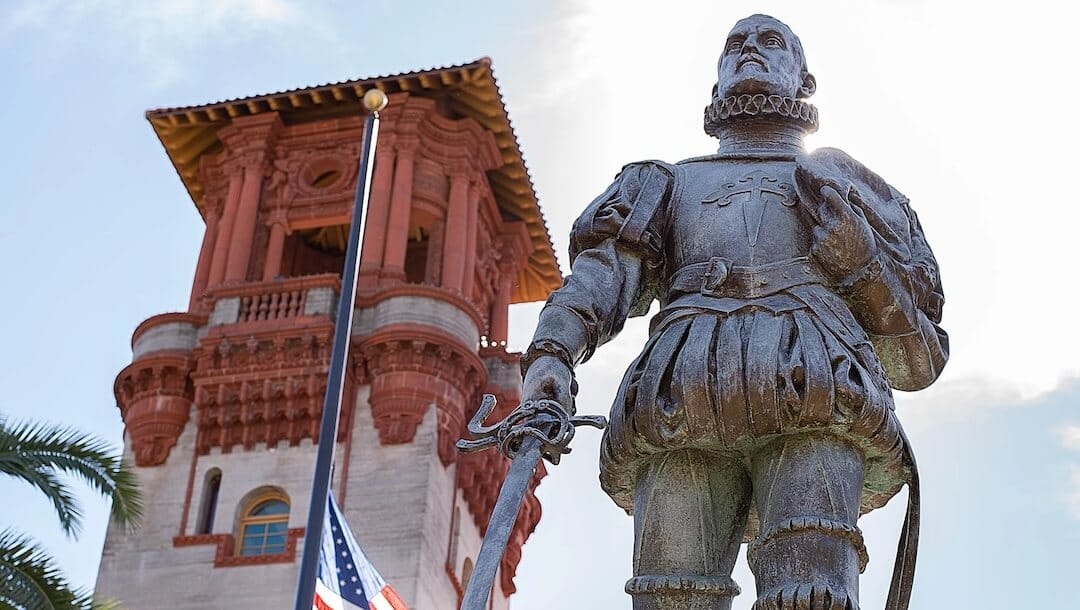
That missionary purpose remained central during the voyage, and, as Kokomoor explained, there were several occasions surrounding the founding of St. Augustine when the Spanish stopped to give thanks, including after surviving the Atlantic crossing and establishing the settlement.
The Sept. 8 gathering stands out because it is the surviving account that specifically mentions Menéndez dining with Native people.
Two days before the thanksgiving event, the Spanish arrived at present-day St. Augustine and sent two companies of infantry ashore near the Timucua village of Seloy. Native inhabitants were recorded as receiving them warmly and gave the soldiers the use of a large house belonging to a chief near the river.
On Sept. 8, Menéndez came ashore amid raised banners, sounding trumpets and artillery fire. Father Francisco López de Mendoza Grajales met him carrying a cross and singing the Te Deum Laudamus, an ancient Christian hymn of thanksgiving. Menéndez and those accompanying him approached the cross, knelt and kissed it, while Native people watched and were recorded as imitating what they saw.
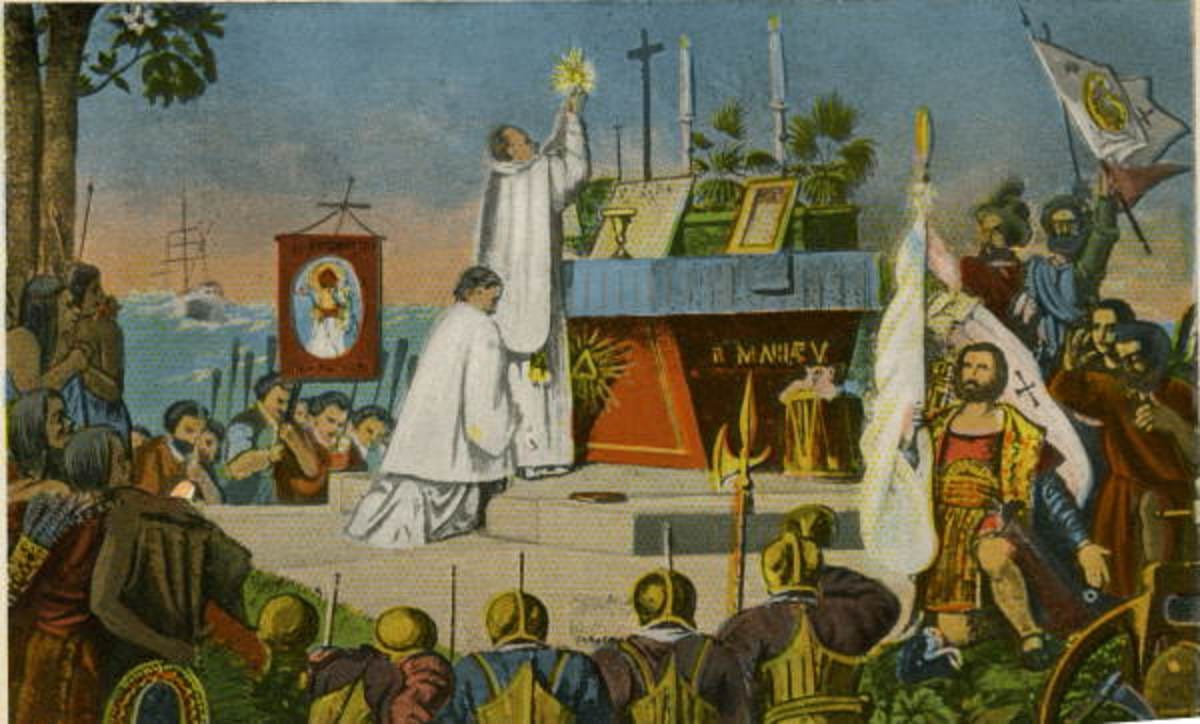
Afterward, the hospitality of the natives was returned. Gannon, in his book The Cross in the Sand, cites Gonzalo Solís de Merás recording that “the Adelantado had the Indians fed and dined himself.”
It is this sentence, and the event it describes, that Gannon identified as the first Thanksgiving, decades before the Plymouth settlers and Native people would share a strikingly similar thanksgiving meal.
The Spaniards named the landing site Nombre de Dios — “Name of God” — and soon established a Christian mission there among the people of Seloy.
On Sept. 11, three days after the landing, Menéndez wrote to King Philip II that he would spend his own fortune on the undertaking because its missionary purpose and the conversion of Native people were “of such great service to God Our Lord.”
The Florida of the Spanish colonial period extended far beyond the boundaries of the modern state. In the 16th century, La Florida referred to a vast Spanish claim encompassing much of the southeastern United States, including territory stretching through present-day Georgia, the Carolinas and Virginia and west along the Gulf Coast.
Across that broader region, Kokomoor argues that the early Spanish presence left a lasting imprint on the South. Spanish colonization brought missions across the Southeast and introduced animals and crops that became part of the region’s culture and economy, including cattle, pigs and oranges. Kokomoor also argues that many of the Southeast’s distinctive food traditions, including barbecue, were influenced in various ways by Spanish attempts to colonize the region.
While Thanksgiving meals today usually center around turkey, ham and mashed potatoes, what was eaten at Florida’s first Thanksgiving is not certain. Kokomoor said Native foods in northeast Florida likely included venison, fish and other coastal foods, while the Spaniards likely had provisions such as salted pork, garbanzo beans, bread and wine.
“It definitely would not have looked like the Thanksgiving that we have now,” Kokomoor told Florida Frontiers.
Still, the St. Augustine gathering 56 years before Plymouth is known to have included Christian worship, thanksgiving to God and hospitality shared between newly arrived European settlers and Native people. A true American Thanksgiving indeed.
— Christians of Brevard is a multi-church initiative that seeks to amplify the voices of local churches and ministries for the purpose of encouraging the local body of Christ and advancing the Kingdom of God. Join our Facebook community @ChristiansOfBrevard