
Matthew's Hope Looks to Local Churches for the Next Step in Homeless Ministry
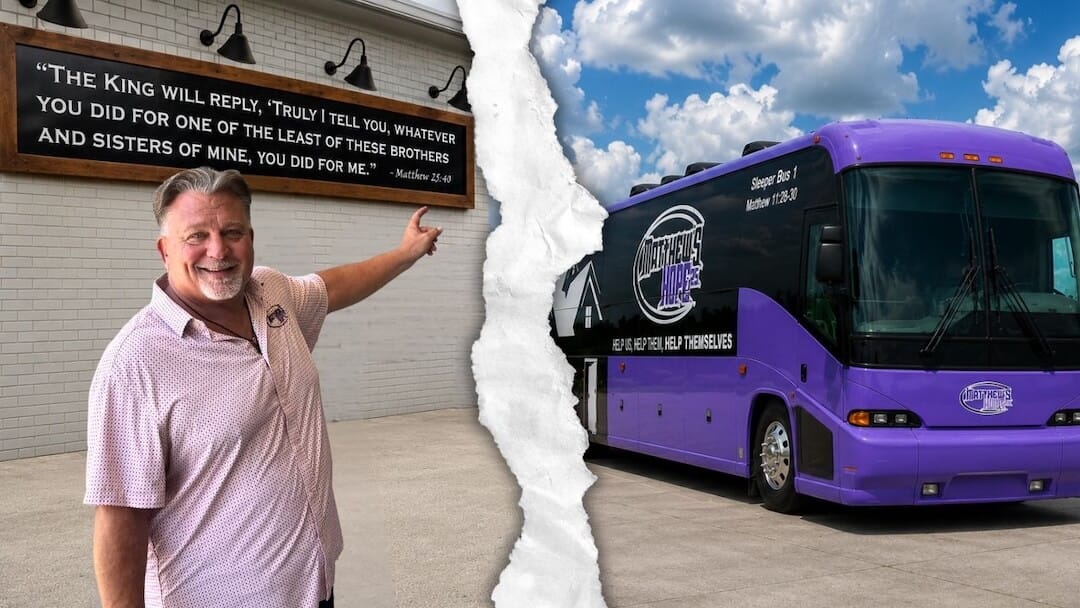
"Truth is, I'm still trying to learn about Brevard," Scott Billue said as we finished a tour of the Matthew's Hope Outreach Center on Thursday. The Cocoa-based ministry opens its doors to serve homeless guests from across the county every Tuesday and Thursday. More than 150 people will pass through its doors before the end of the day—an impressive figure considering the ministry launched in Brevard just four short years ago.
Scott came to Brevard to retire and "slow down," he said, but the slowdown wasn't meant to be. By the time Matthew's Hope opened its Cocoa campus in 2022, Scott had already spent more than 16 years in homeless ministry, including 12 years leading Matthew's Hope in Winter Garden, the ministry he founded in 2010. Driving through Brevard after moving here in 2019, he recognized that the county had many of the same needs and would benefit from the coordinated model Matthew's Hope had developed.
So instead of slowing down, he purchased the campus of the former First United Methodist Church of Cocoa for $1.6 million, invested another $5 million to renovate it, and launched what has become Brevard's largest homeless ministry, now making 600 to 700 contacts each week.
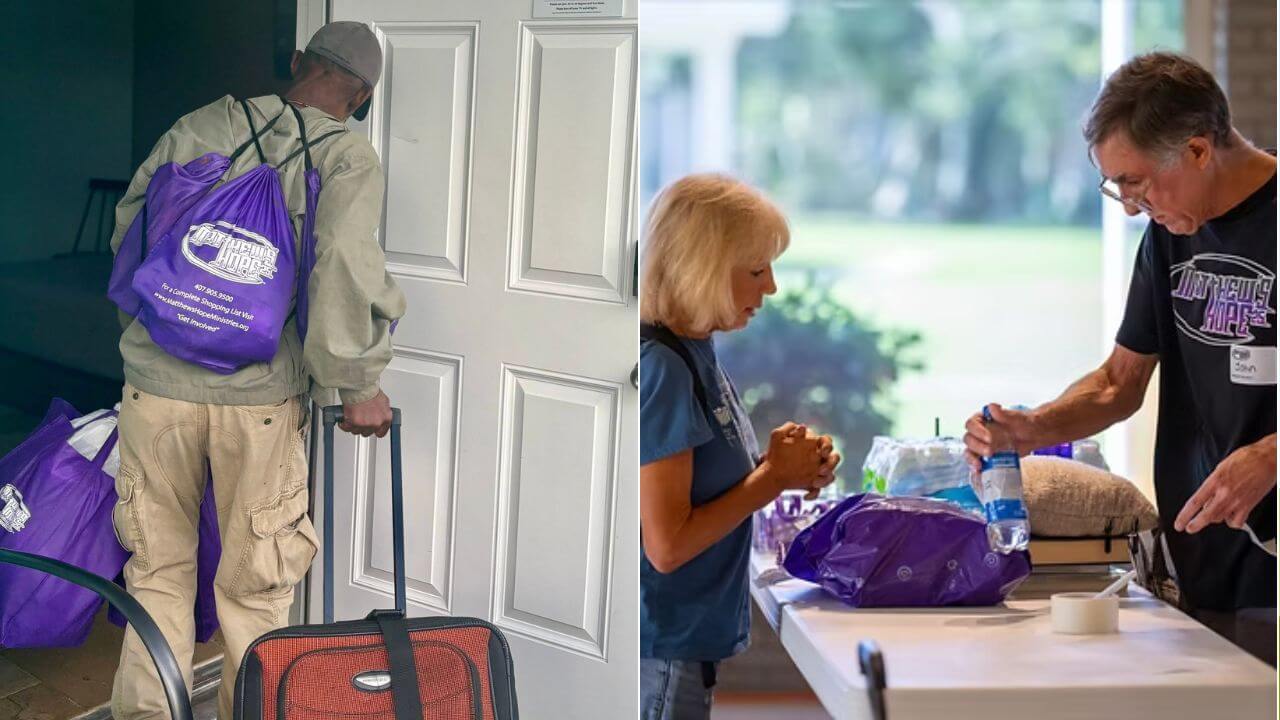
The growth has made a measurable difference in the community, but it has come so quickly that many city leaders are often seeing the "purple bags" Matthew's Hope entrusts to its homeless guests before they're seeing the extent of the problem those bags represent.
The tour today reflects Scott's attempt to change that, introducing local city leaders to the problems hidden in their own backyards that will soon be coming to their doorstep, along with the solutions he and his team are developing.
I shared today's tour with Tara Connor, a councilwoman for the City of Rockledge. Scott said he's inviting every city council member and county commissioner in Brevard to tour the campus, learn about the ministry, and help him better understand the communities they serve.
"Who's to say we won't learn something from y'all?" Scott said, speaking to Tara about his collaborative vision. "You might know something we don't know."
The Sleeper Bus Program
The call to come to the table and collaborate is always on Scott's heart, but the most recent call carries heightened urgency. Matthew's Hope is launching a new program designed to expand its overnight ministry throughout Brevard County and serve homeless guests where they are. But the program will require far deeper collaboration between local cities and churches than Matthew's Hope has seen previously.
The ministry already reaches across Brevard through its transportation network and three mobile outreach teams. On Mondays and Wednesdays, those teams travel throughout the county serving those in need with food, clothing and hygiene supplies. On Tuesdays and Thursdays, scheduled bus routes pick up homeless guests from across the county, bring them to the Cocoa outreach center for services, and return them to the same locations afterward. (Scott was emphatic here that Matthew's Hope is never "dumping" homeless people into local communities from elsewhere. Every guest is returned to the same location where they were picked up.)
But the data Matthew's Hope collects is telling Scott it isn't enough.
Since launching in Brevard, Matthew's Hope has registered nearly 1,800 people experiencing homelessness—hundreds more than the county's annual Point-in-Time count would suggest, and more than existing resources can adequately serve.
Of those, a concerningly large number are entering homelessness from the baby boomer population.
"Baby boomers are the fastest-growing first-time homeless population," Scott said. "Right now, more than one in three people who walk in here is a baby boomer who's never been homeless."
The proportion of baby boomers experiencing homelessness has grown rapidly in recent years as the cost of living has outpaced fixed incomes. Aged out of many employment opportunities and without family to lean on, some of these older men and women are being forced onto the streets.
In other cases, the death of a spouse leaves the surviving partner without enough income to remain housed. Others are adults with physical or mental disabilities whose longtime caregivers have died, leaving them with no support and few options.
"Those people used to die in their 30s," Scott noted grimly. "Now they're living into their 40s, 50s, 60s, 70s. The caregiver dies, and they're out on the street with a $709 disability check, which will get them nowhere."
The trends are alarming.
"Last time we looked, we were running just about 36% baby boomers, 11% under the age of 18, 8% college age," Scott said.
To add to the trouble, Florida's new anti-camping law, HB 1365, which prohibits unauthorized public camping and sleeping on public property, has disrupted traditional homeless encampments and, Scott said, left many cycling in and out of jail while facing the impossible task of complying with the law without a home or shelter to turn to.
The combination of these forces is setting up a perfect storm for what could soon become a very visible problem, and has led Matthew's Hope to develop its new Sleeper Bus program: renovated tour buses retrofitted to sleep up to 20 homeless guests each night. Guests can register for stays of up to three nights, receiving a clean bunk with freshly laundered linens aboard the air-conditioned buses while remaining connected to Matthew's Hope's broader network of services.
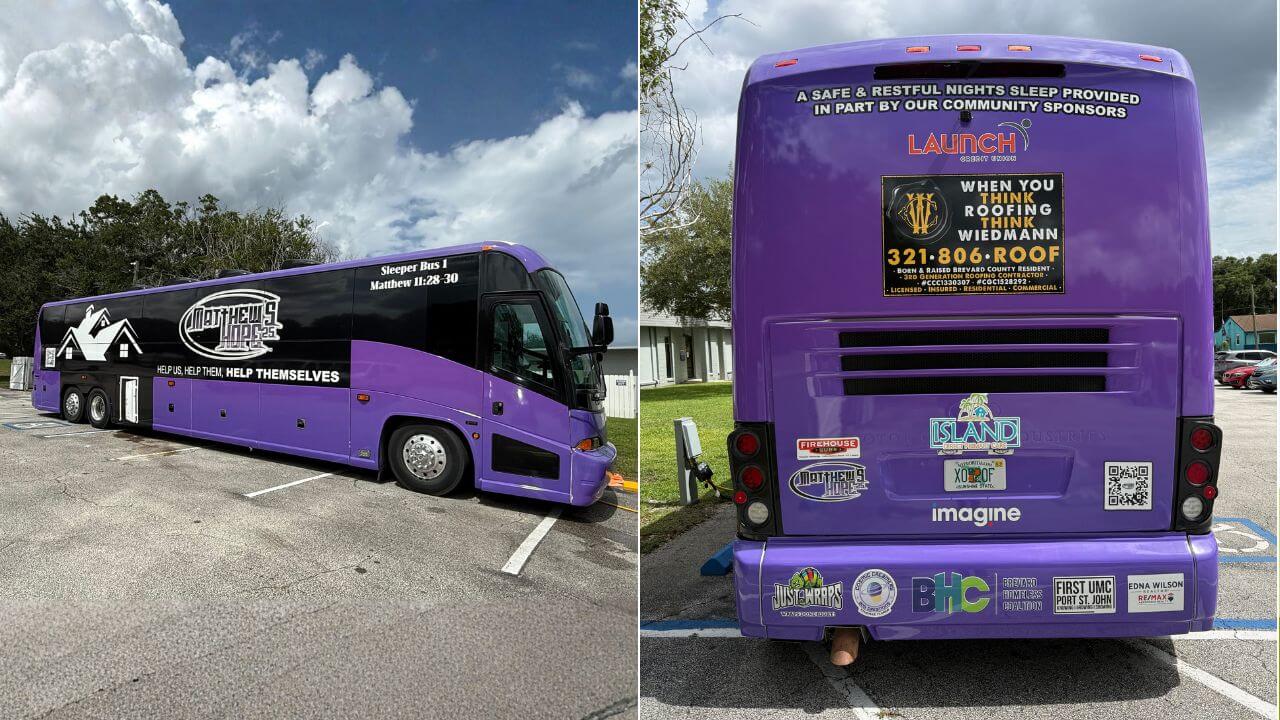
"The buses are not going to solve homelessness," Scott said. But with the camping law forcing more homeless people out into the open and limited city support for shelters, the program offers a low-disruption response and a valuable point of contact for the homeless to connect with local churches and critical care providers. "The real intention is to be a stepping stone into hopefully getting them other services to get them eventually housed," Scott said.
The first two buses launched in June, picking up guests across the county and bringing them back to the Cocoa campus for overnight stays. The program is still on a "trial run." The real long-term vision is to partner with local churches so the buses can remain in the communities they serve.
"Churches are unique community partners," Scott explained. By nature of their religious status, churches are provided broad legal latitude to offer many of the charitable services homeless guests need on church-owned property.
"Churches are allowed to shelter people. They're allowed to do a lot of things. We want to partner with churches, preferably churches, because it makes the most sense," Scott said.
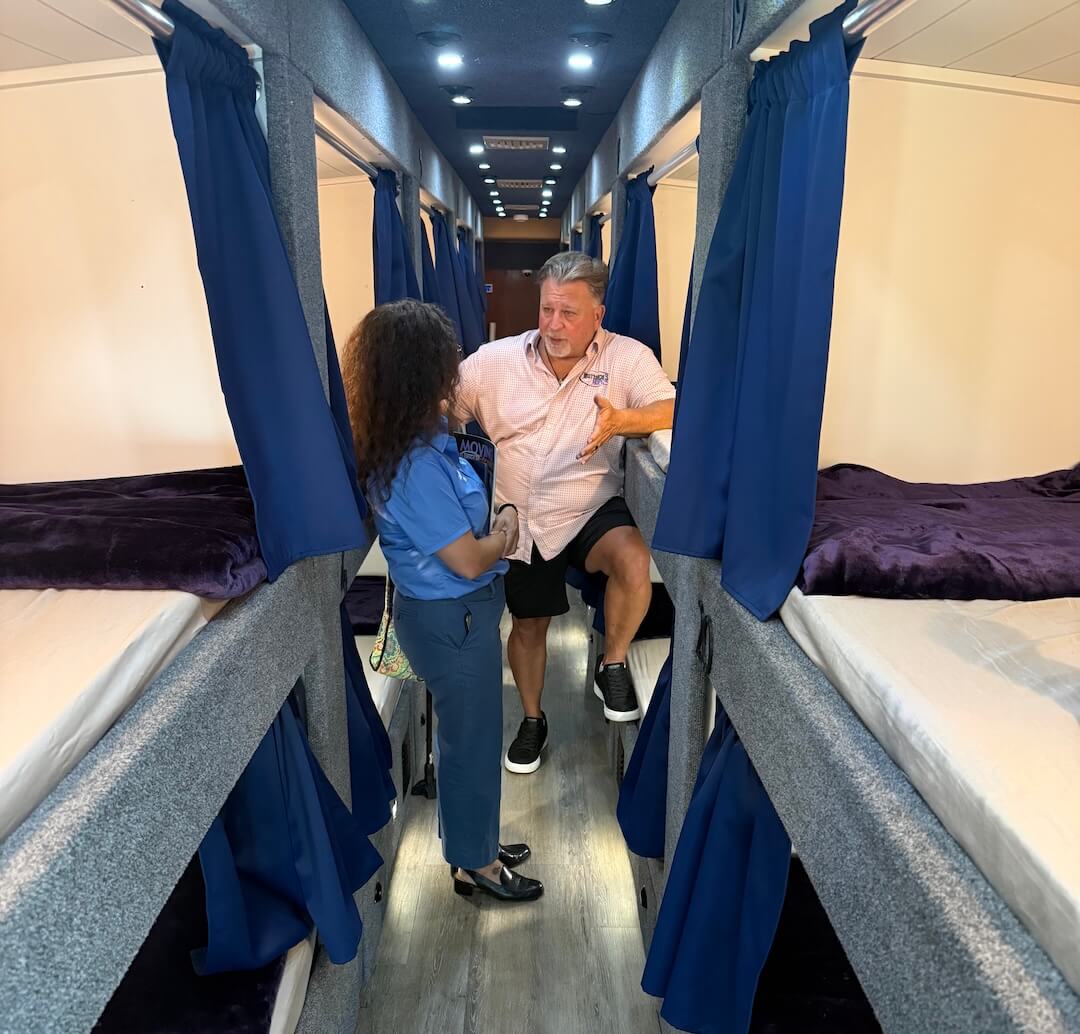
The model asks local churches to commit to hosting a bus for up to three nights at a time. The buses arrive at sunset and leave before sunrise each morning, requiring little more than access to an electrical hookup and restrooms. Staffed by a driver and a professionally trained security officer, a Matthew's Hope attendant supervises the bus at all times, while every restroom visit is accompanied by security personnel, who also inspect the facilities after each visit and before final departure. The goal is to be safe and non-disruptive.
"We don't want to bring a lot of attention to it," Scott said. "We want to be a really good neighbor and just be really quiet."
Matthew's Hope in Action
The scale of the operation at Matthew's Hope can seem like a logistical nightmare, yet it runs like a well-oiled machine.
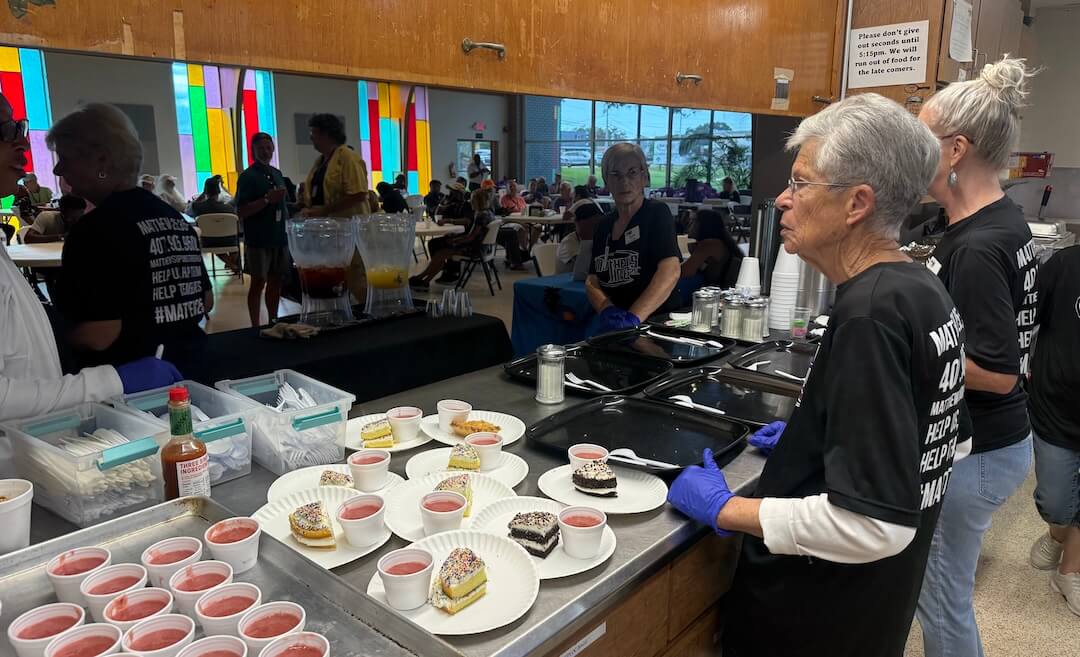
Every guest begins with an intake process, where staff assess their situation and issue a personalized Matthew's Hope ID. That ID follows them throughout their relationship with the ministry, tracking the services they receive and their progress from visit to visit.
From intake, guests are provided a light meal of cereal, coffee and juice before heading to the showers. Afterward, they receive a full hot breakfast and, later in the day, lunch.
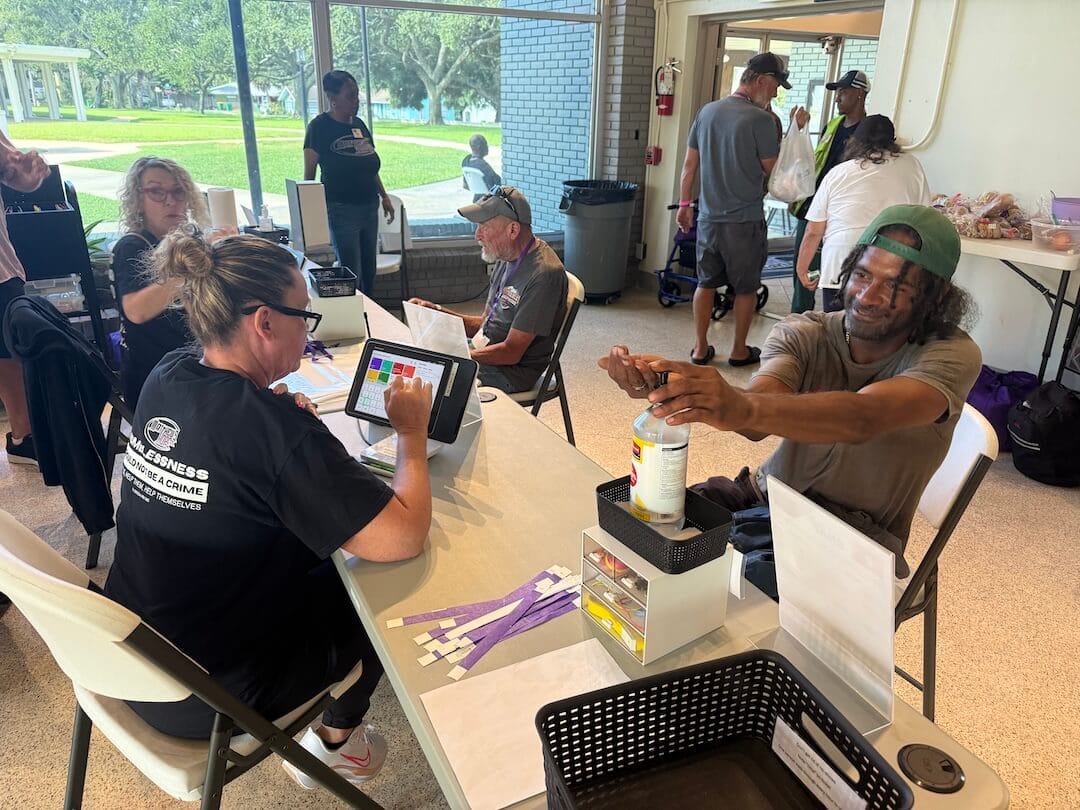
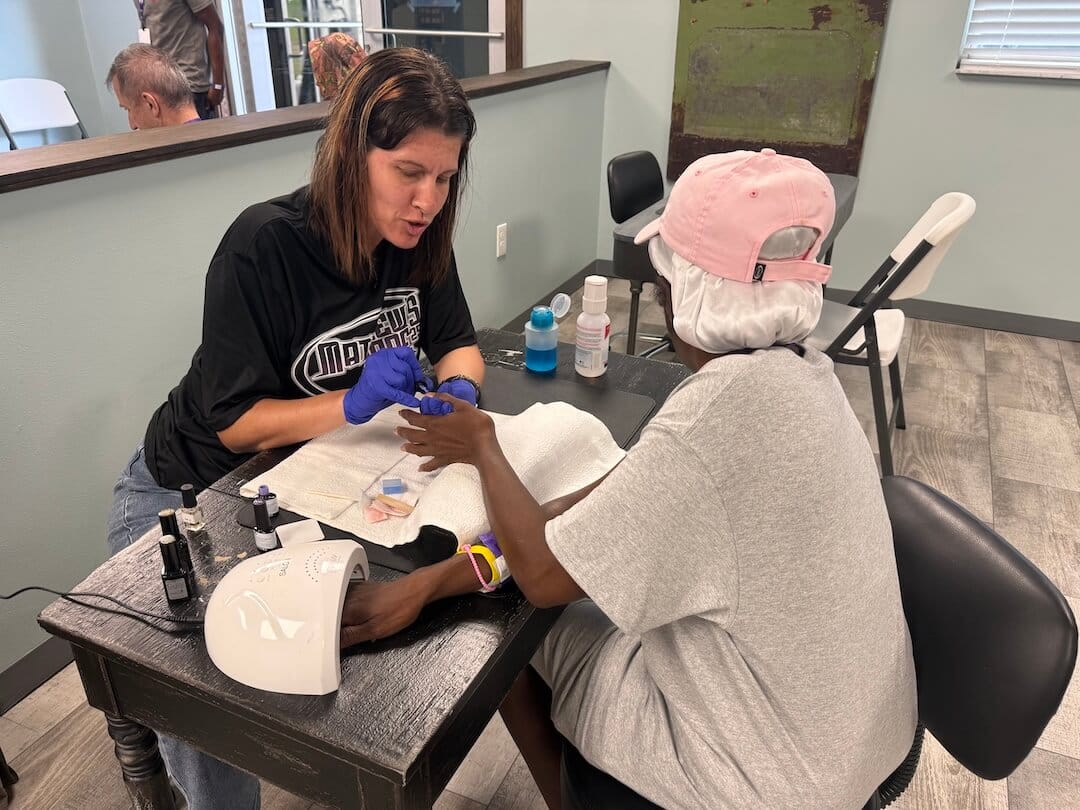
No time is wasted while guests wait for showers to open. Laundry, medical care, phone charging, pantry services, haircuts, manicures, case management and dozens of other services operate simultaneously throughout the campus. During intake, staff ask what services each guest needs, and as that information is entered into the system, small printers located throughout the campus automatically print service tickets for volunteers, allowing each department to schedule guests as they move through the morning. The entire system is managed through a modified version of Square, a payment processing platform.
"Square doesn't even know how we did what we did. We called them, and they said, 'How'd you figure that out?'" Scott said with a laugh. "We're not a soup kitchen, but we feed people. We're not a shelter, but we house people. We're not a medical facility, but we offer medical care," Scott said. "Nobody knows what to do with us."
Like the Square system, Matthew's Hope's volunteers and employees are essential to the ministry's efficiency, and Scott is always on the lookout for dependable hands he can promote into leadership. Significantly, many of the human "gears" who keep the ministry running day to day first walked through its doors as guests, including the now-director of Matthew's Hope's Orange County operations.
The machine Scott has built will operate without him, but the heart is his.
Meet Scott Billue
Scott's passion for the homeless is rooted partly in his own story. As a child, his single mother struggled to make ends meet after moving the family to Florida. Their living situation became increasingly unstable, and Scott remembers gradually realizing that what they were experiencing wasn't "normal." They were homeless.
Years later, Scott gave up a successful six-figure career in sales and marketing to enter pastoral ministry, convinced that God was calling him to plant churches. His success in this "second career" would prove to be both great and abysmal.
"I've been fired from more churches than I've planted," Scott joked.
The trouble often was that, while churches wanted to help the homeless, they feared the disruption that would come if homeless men and women began showing up at their doors.
It was the story of Scott's first church. Fresh out of seminary, he accepted a call to pastor a struggling congregation of just 17 people. He quickly grew it to more than 300, but the relationship with church leadership began to fray. The people Scott was reaching weren't the people church leadership had expected. They eventually asked him to leave.
The final church Scott planted in Kissimmee was different, but the challenges he had encountered ministering to the homeless through the local church had already led him to found Matthew's Hope as a separate organization. As the ministry in Orange County continued to grow, the demands of pastoring a church while leading a rapidly expanding nonprofit eventually became too much, and Scott stepped away from the pastorate to devote himself to Matthew's Hope full time.
It's still Christian ministry. While Scott no longer preaches from a pulpit each Sunday, he now serves much the same role as a mentor and guide to the lost.
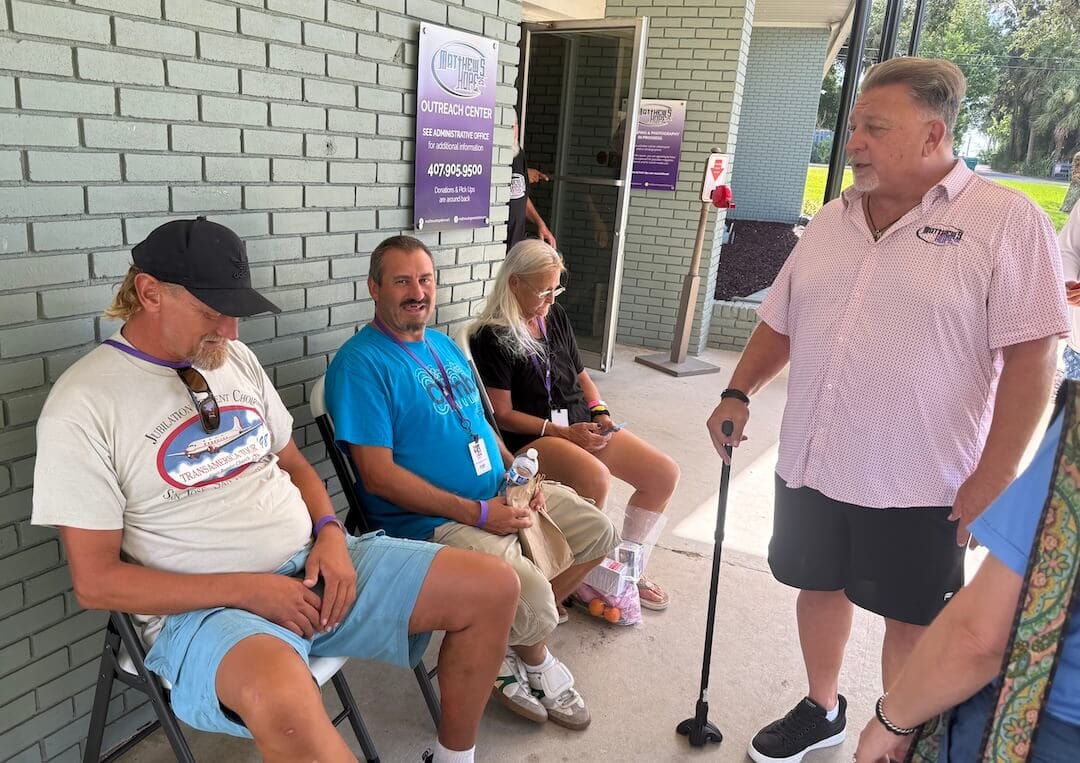
"Matthew's Hope is a ministry first and foremost," Scott explained. "Demonstrating—that's the key word there—the love, hope, grace and mercy of Jesus Christ in all we do. And we're a facilitator of opportunity for those who desire to move forward toward a life of independence and self-sufficient sustainability."
It's clear that Scott believes in the mission of Matthew's Hope with his whole heart, and he's proud of the churches that partner with him. But he also sees the ministry as a reminder of where the Church has fallen short.
"If the church was doing what she was designed to do, in my humble opinion, Matthew's Hope wouldn't exist," Scott said. "These people would all be cared for. The church would be wrapping their arms around them, and they don't."
Today, Matthew's Hope is a $15 million organization. Yet less than one-half of 1% of its funding comes from churches, and the churches that do support the ministry are often the smaller congregations.
"I'm not trying to Debbie Downer," Scott said. "That's just been my experience, both as a pastor and as the minister, or leader, of Matthew's Hope."
Partners Wanted: Will Train.
One place where the Church is shining is through Matthew's Hope's volunteers. While not every volunteer is a Christian, or expected to be, many come from churches across Brevard County, serving meals, cutting hair, washing laundry, providing medical care and simply spending time with Matthew's Hope's guests.
Joe is one of them. A member of Church at Viera, Joe and his wife first toured Matthew's Hope about a year ago while looking for a place to serve. They began volunteering during the ministry's Cold Night Shelter, which opens as weather conditions require it.
"Our church is very big on serving," Joe explained. "We came over and did a tour. Showed up and stuck around."
He thinks many Christians are simply overwhelmed by the scale of homelessness, just as he once was. He encourages them not to let the size of the problem keep them on the sidelines.
"One of the mantras of our senior pastor is, 'Do for one what you wish you could do for everyone,'" he said. "God uses us all in different ways. We don't have to be the one up front... just there, helping."
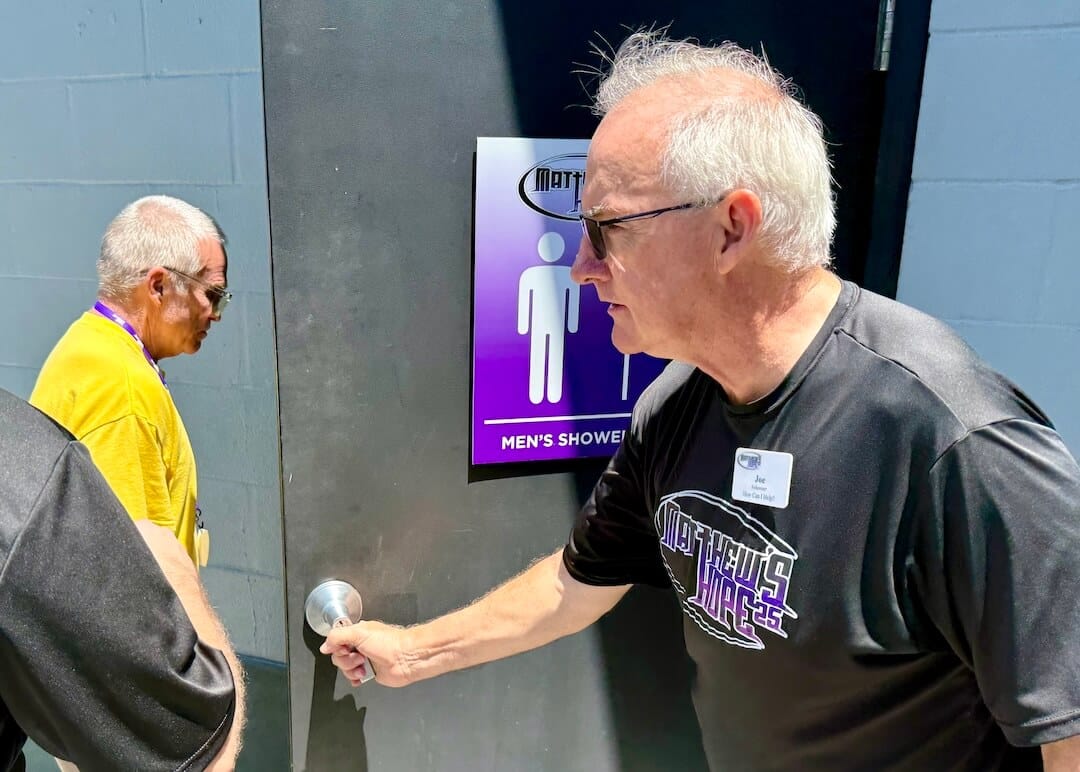
That's the mentality Matthew's Hope is looking for in its partner churches as it expands the Sleeper Bus program.
Matthew's Hope already knows who the homeless are. It already knows how to serve them. The transportation routes, security, staffing, case management and operational systems are already in place. Churches don't have to build a homeless ministry from scratch. Matthew's Hope will walk alongside them, providing the experience, infrastructure, and even legal support if needed. Churches simply need to provide a place to park, access to electricity and restrooms, and a willingness to partner for three nights at a time.
In a journey of a thousand miles, Matthew's Hope has the experience and resources to get 99% of the way to the finish line. They just need the local church to say yes and take the final step.
Churches interested in partnering with Matthew's Hope's Sleeper Bus program can learn more at matthewshopeministries.org or contact Scott Billue directly at scott@mhm25.org to discuss how their congregation can get involved.
Follow Christians of Brevard and view more photos from Matthew's Hope's outreach day on Facebook:
— Connor Mahoney is a Brevard County native and graduate of Florida Institute of Technology. He attends Holy Trinity Episcopal Church in Melbourne.
— Christians of Brevard is a multi-church initiative that seeks to amplify the voices of local churches and ministries for the purpose of encouraging the local body of Christ and advancing the Kingdom of God. Join our Facebook community @ChristiansOfBrevard


