Space Coast Pride Returns to Melbourne This Weekend: Can Christians Support?

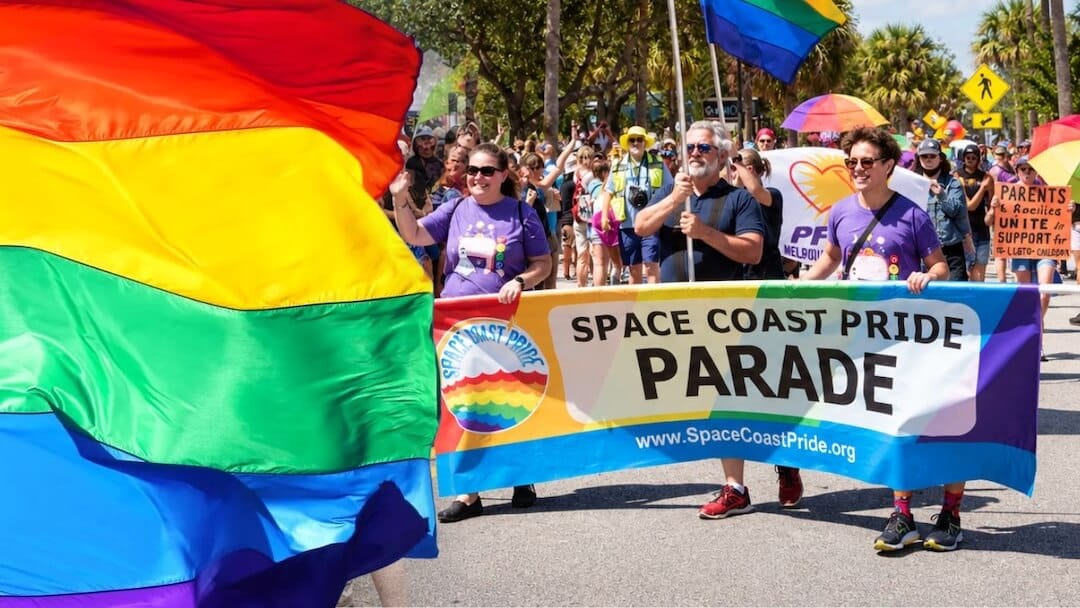
Space Coast Pride will take to the streets of Downtown Melbourne this weekend for its annual festival, with a parade planned through downtown Saturday followed by an indoor and outdoor fair at the Melbourne Auditorium. Among the controversies surrounding the polarizing cultural issue this year is visible support from local Christian ministries, including area churches and homeless ministry Matthew’s Hope.
Controversy began in August when Space Coast Pride announced a partnership with Matthew’s Hope to provide shuttle transportation between Downtown Melbourne and the Melbourne Auditorium for festival attendees throughout the day.
On Aug. 23 local pastor Seth Tweeddale called attention to the partnership in a Facebook post urging Christians who support Matthew’s Hope to contact the ministry and ask for the partnership to be dropped. Tweeddale said he had raised the issue privately to Matthew’s Hope founder and CEO Scott Billue by email prior to making the callout post and had received word that “he desires to continue his Sponsorship of Space Coast Pride Fest.”
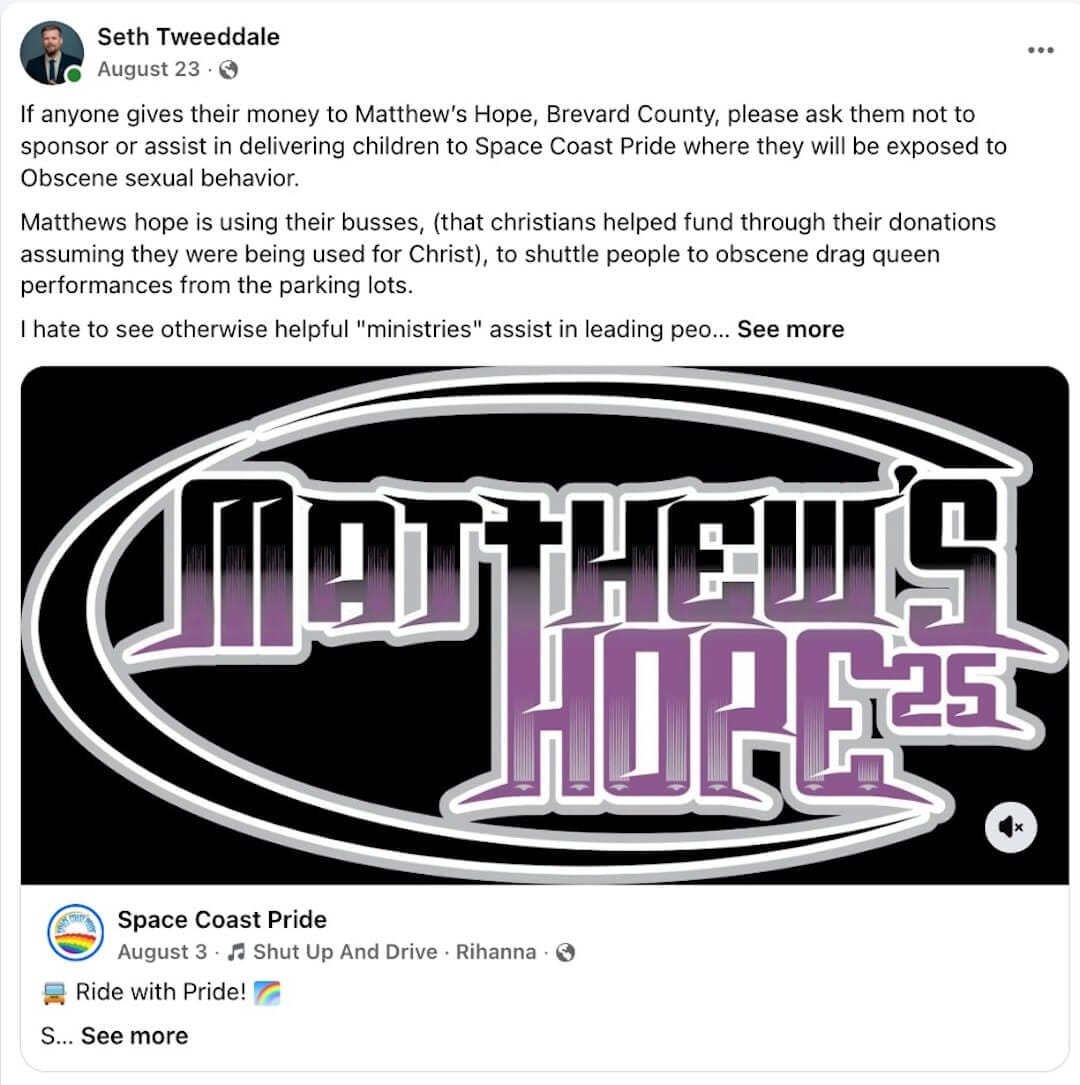
The post sparked debates on Tweeddale’s post and on response posts made by Matthew’s Hope over whether Christians could support pride activities.
Matthew’s Hope was initially listed as a Silver-level sponsor on Space Coast Pride’s website, a sponsorship level priced at $2,500. Reached for comment, Billue stated that the listing was a mistake on the festival’s part and that Matthew’s Hope had “not given them money or anything else in exchange for a sponsorship.” Instead, he said organizers are paying $400 per bus and reimbursing fuel costs. The sponsorship listing has since been removed.
Billue said he views the bus partnership as an opportunity to “show the love of Jesus to others no matter their race, religion or sexual orientation.”
“Unfortunately the broken all too often only see the wrath of the church and christianity. We choose to live out the Gospel believing no one has ever be[en] hated towards the Cross,” Billue said.
Child Welfare Concerns
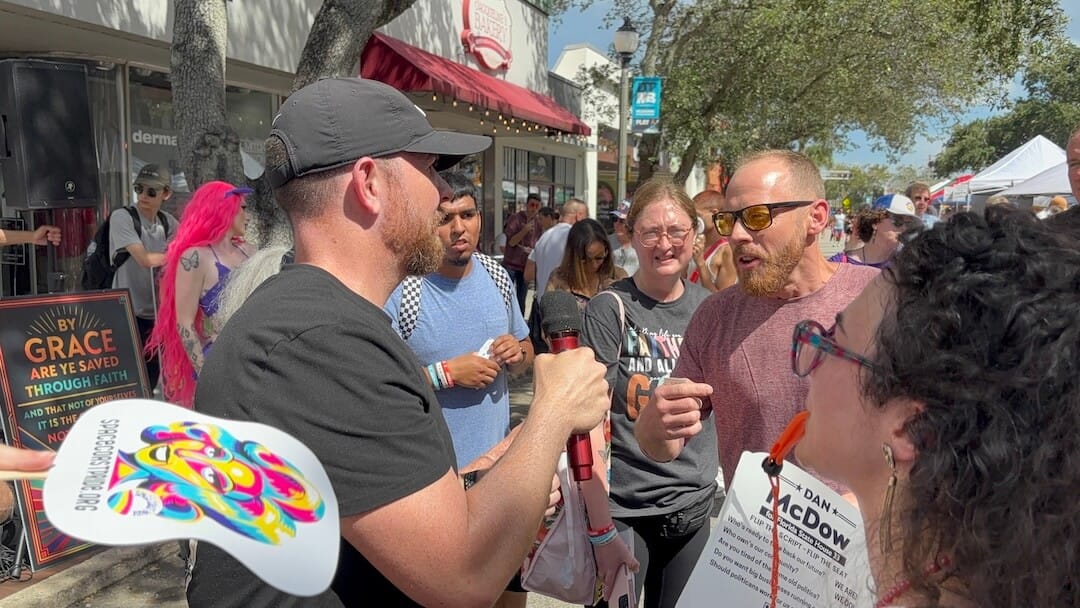
Citing Matthew 18:6, Tweeddale also raised concerns that Matthew’s Hope buses would be “delivering children to festival events where they would be exposed to obscene behavior.” Festival attendance is not age-restricted, and the possibility of children being exposed to sexual content was a recurring concern among commenters opposing both the festival and Matthew’s Hope partnership.
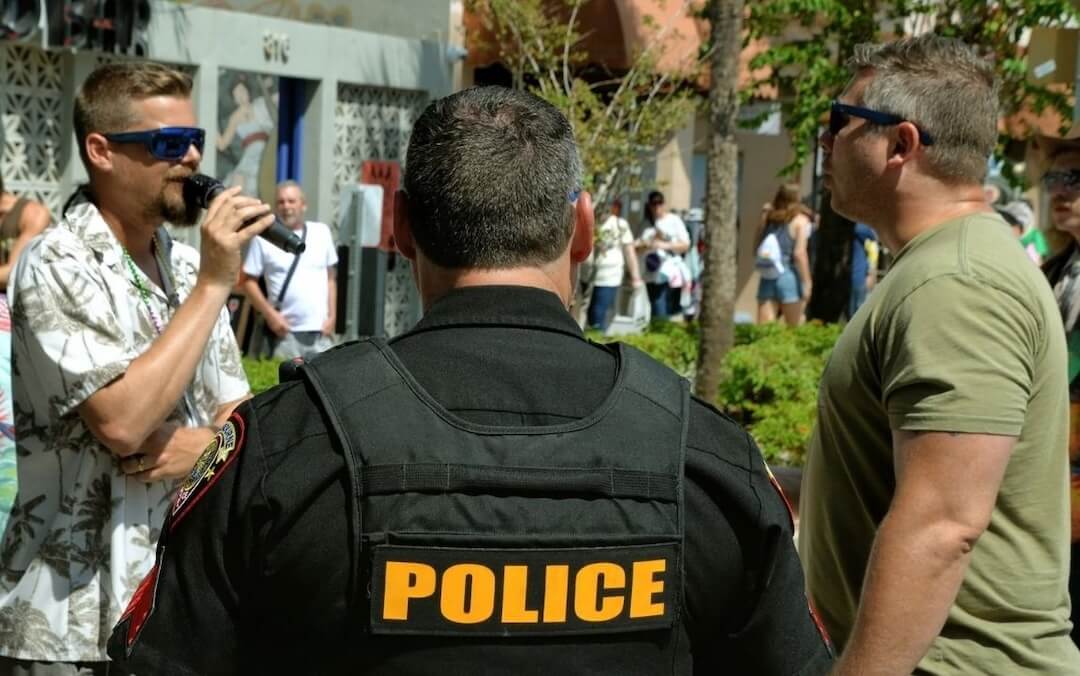
Similar concerns were raised during public comment at an Aug. 25 Melbourne City Council meeting, where speakers asked the city to revoke the festival’s permit. Mayor Paul Alfrey rejected allegations about conduct at previous festivals as unfounded.
“I took a lot of heat from people making false accusations about things that were allegedly happening that wasn’t happening,” Alfrey said of past complaints. “We have our police department and … they monitor. If anything is out of line with not just that event, for all events, they take action. And I trust our law enforcement will do that.”
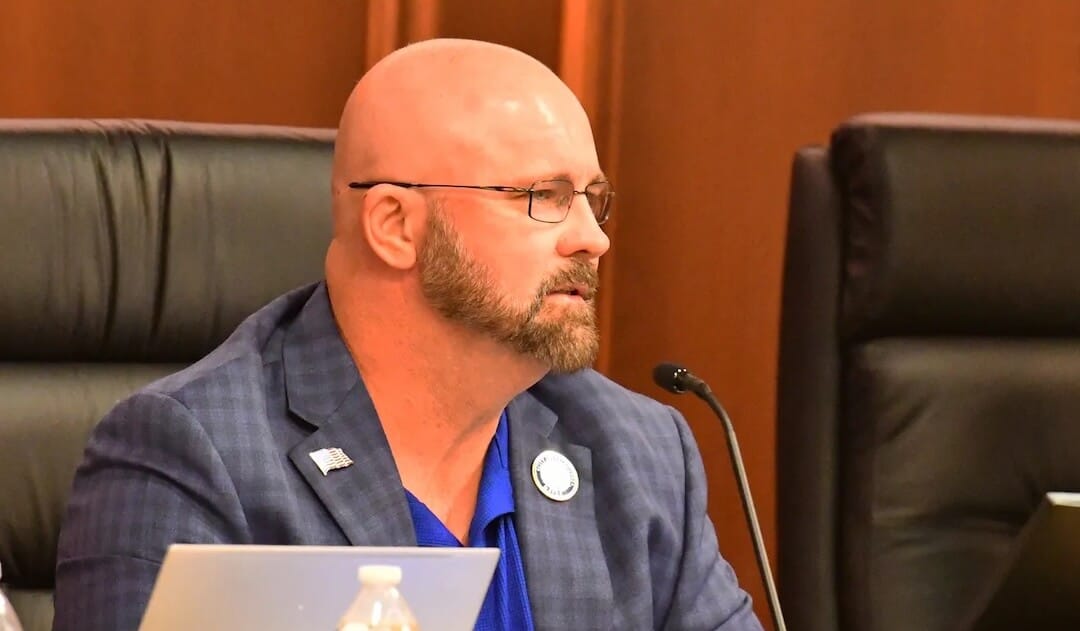
Alfrey also appealed to the constitutional rights of festival organizers.
“The problem is it’s not about local government. It’s about the U.S. Constitution… you don’t blow up the Constitution because something goes on that you don’t like,” Alfrey said. "While I’m mayor, whether people like it or not, I will stand up for the U.S. Constitution.”
But Tweeddale warned sponsors of new legal risks that became enforceable this year. Florida Statute 827.11 prohibits any person from knowingly admitting a child to an “adult live performance” that “depicts or simulates” sexual activity. While adopted in 2023, a court injunction prevented the statute from being enforced. That injunction was lifted this August.
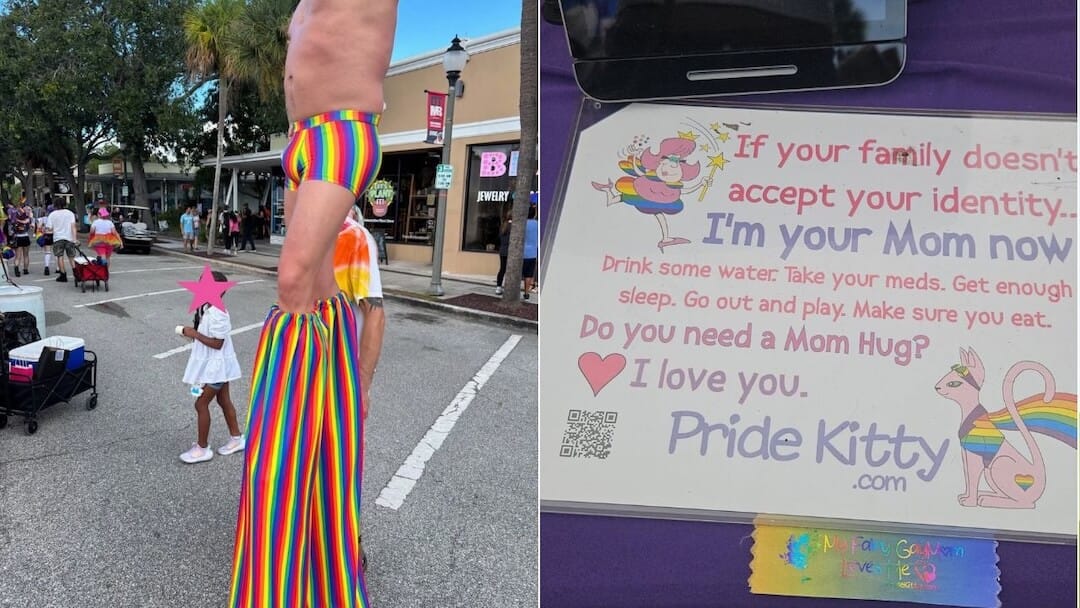
Tweeddale, who in addition to pastoring serves as the state faith director for Citizens Defending Freedom, a national conservative nonprofit that seeks to equip local citizens and churches with educational material to help them engage their local communities, has participated in street preaching and evangelism at past festivals and said he observed activities that would violate the statute.
“Should materially similar conduct occur while children are present this year, the responsible organizers, performers, vendors, premises operators, and other knowing participants may face investigation and potential enforcement,” Tweeddale said.
Christian Theology on Same-Sex Relationships
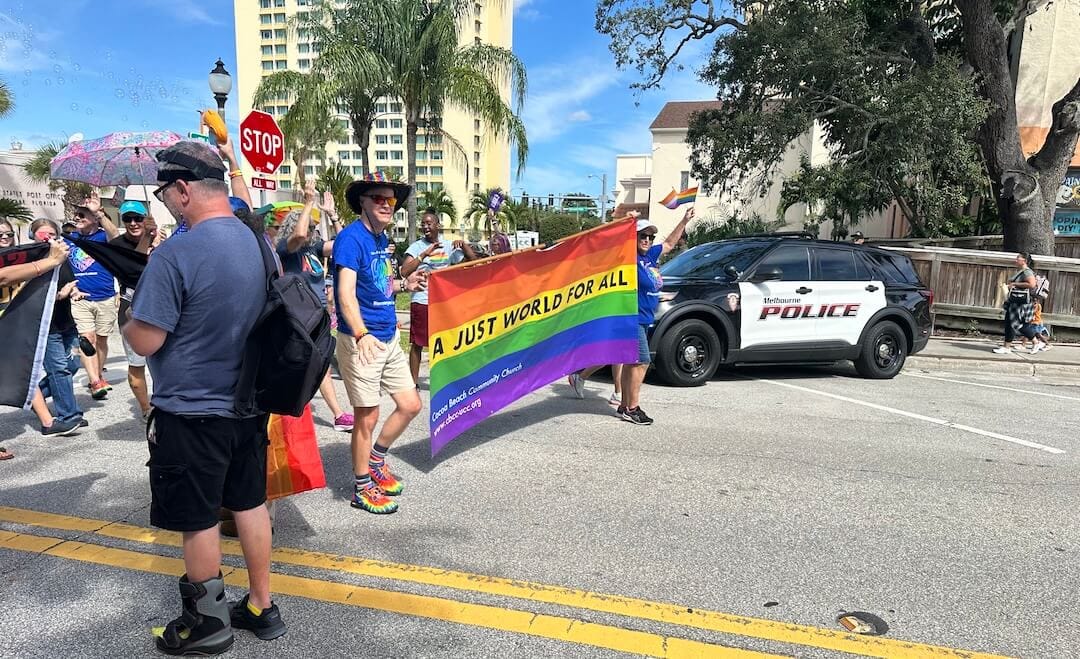
Matthew’s Hope is not the only Christian ministry with ties to Space Coast Pride. Eastminster Presbyterian of Indialantic, Crossroads United Church of Christ in Melbourne, Cocoa Beach Community Church UCC, and Hope United Church of Christ in Rockledge marched in support at last year’s parade, and past support has also been seen from Riviera UCC.
While sometimes framed as a political issue, at its core the cultural divide over same-sex affirmation is religious.
Prior to the mid-20th century, Christianity has universally taught that all sexual relations outside of marriage are sinful while also viewing marriage as a God-ordained institution designed for one man and one woman. The concept of sin is core to Christian teaching. Without sin, there is no need for grace, and therefore no cause for Christ’s sacrifice on the cross. The incarnation, death, and resurrection of Jesus becomes a meaningless stage-play.
Because of the weight of biblical statements on the sinful nature of same-sex relations, affirming Christians might justify their beliefs by simply rejecting biblical inerrancy—the belief that the Bible, in its original manuscripts, is without error. Apart from a doctrine of biblical inerrancy, this position is sometimes accompanied by the rejection of other historic Christian doctrines, including the virgin birth, the resurrection, and, in some cases, the divinity of Jesus entirely.
However, it is possible to find affirming Christians who do not reject biblical inerrancy. Proponents of a modern theological position under the label inclusive orthodoxy will suggest that relevant biblical passages have been historically misunderstood or don’t apply to modern same-sex relationships while otherwise affirming biblical authority and historic Christianity.
Still others who adopt a Side B label, set against “Side A” labeling that affirms same-sex relations, will agree that Christian doctrine precludes the possibility of same-sex sexual relationships while also believing the church should be affirming of non-heterosexual identities. Some with this view might go so far as to say that Christians can, or even should, celebrate pride while simultaneously upholding an ethic of celibacy outside of traditional marriage.
The complexities of Side A and Side B positions can create ironic combinations. For example, on a recent episode of Justin Brierley’s Uncommon Ground podcast, David Bennett, a Side B Christian who rejects same-sex relationships, was more willing to engage with queer-theory biblical analysis than Matthew Vines, a Side A affirming Christian who was inclined to reject queer theory on the basis of biblical sufficiency.
While non-Christians are free to reject Christianity’s framework and might view these debates as academically frivolous, they are all too real for those who wish to adhere to an honest Christian faith while rejecting historic Christian beliefs on same-sex relationships. But the difficulty doesn’t stop with reconciling the relevant biblical passages; such arguments must also contend with the weight of nearly 2,000 years of consistent theological interpretation across language, culture and time.
Even among mainline Protestant denominations that now affirm same-sex marriage, denominational approval is relatively recent. The United Church of Christ’s General Synod adopted a resolution affirming equal marriage rights in 2005, becoming the first mainline denomination to do so. The Presbyterian Church (U.S.A.) approved a gender-inclusive definition of marriage in 2015, while other mainline denominations adopted their own changes at different points over the following years.
Outside these denominations, arguments affirming same-sex relationships remain unconvincing to the majority of Christians globally, including evangelicals in the West and the Catholic and Eastern churches—and outside our modern window of time, theological support for same-sex relationships drops to near zero.
Is it possible the Church has been wrong on such a critical issue for so long?
Can Christians Support?
As far as the mission of Matthew’s Hope is concerned, the ministry does not have a statement of faith or attempt to arbitrate between theological positions on the question of same-sex relationships.
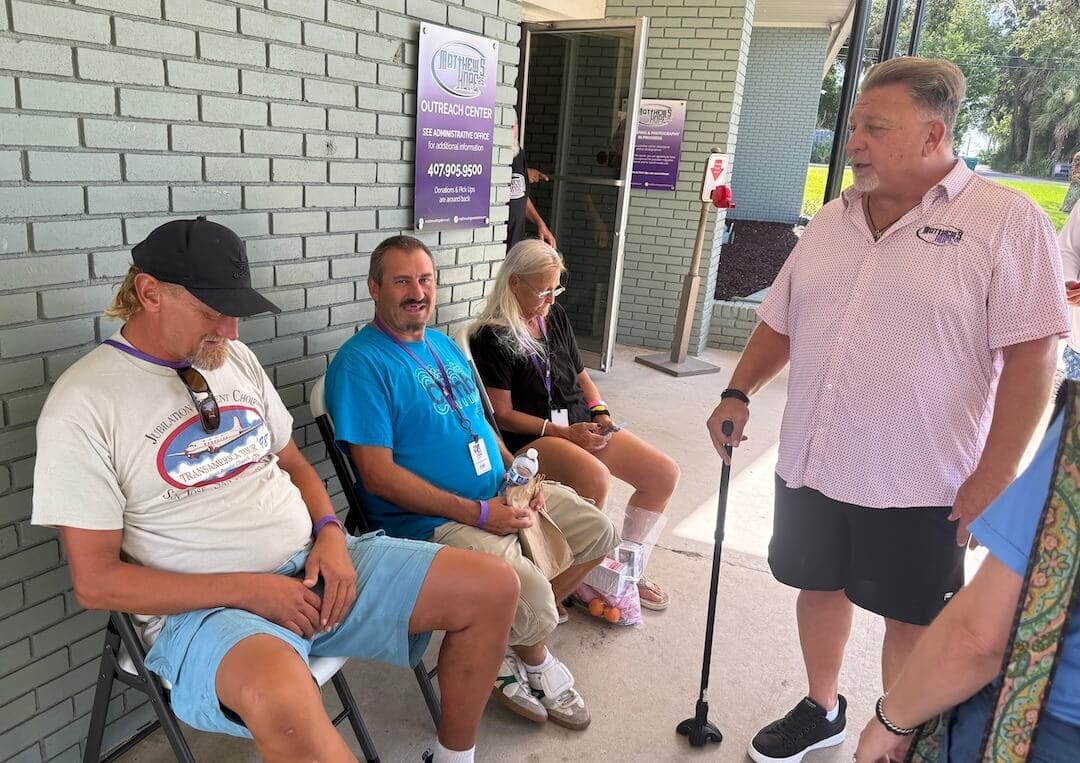
“Not all that serve here, through a litany of denomination and non-denominational churches, agree on a particular Statement of Faith so we have rested our mission since day one on Matthew 25:35-40 and Mark 12:30-31.” Billue said in August. “If someone chooses to not serve the least of these based on a particular Statement of Faith, they will answer for themselves as will we.”
Billue’s personal convictions, however, are less clear. He completed a seminary degree at Reformed Theological Seminary in Orlando and pastored for a decade before founding Matthew’s Hope. During a July interview seeking support from local churches for the ministry’s new sleeper bus program, Billue made an offhand remark that homosexuality was something he struggled to “get my head around” for two reasons: Scripture and the fact that he is “straight.”
Regardless, the operation Billue has built over the past decade and a half serving the homeless in Central Florida is substantial. More than 1,800 homeless people have been registered by Matthew’s Hope in Brevard County alone, with the ministry making about 150 contacts each service day and 600 to 700 contacts a week. No other homeless charity or government agency in Brevard comes close to that level of impact.
And sadly, the impact has also been made largely without the support of the local church. Billue was careful to articulate at the time of the July interview that less than one-half of 1% of Matthew’s Hope’s funding came from churches, with most of the amount contributed by small fellowships.
“If the church was doing what she was designed to do, in my humble opinion, Matthew's Hope wouldn't exist.” Billue said. “These people would all be cared for. The church would be wrapping their arms around them, and they don't.”
While the participation of local churches is critical to the sleeper bus program, Billue didn’t expect that support to come easily. “I'm not trying to Debbie Downer. That's just been my experience, both as a pastor and as the minister, or leader, of Matthew's Hope,” he said.
Nevertheless, explicitly partnering with a Pride-affirming festival is going to be a bridge too far for many traditionally orthodox Christians.
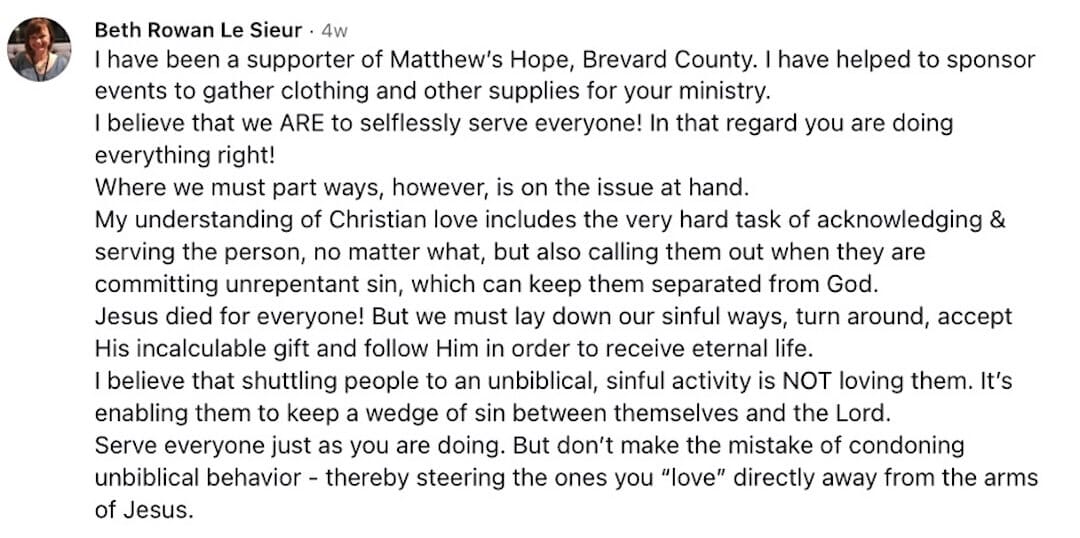
One donor perhaps best articulated that sentiment in a relatively peaceful exchange in the Facebook comments. Beth Rowan Le Sieur wrote:
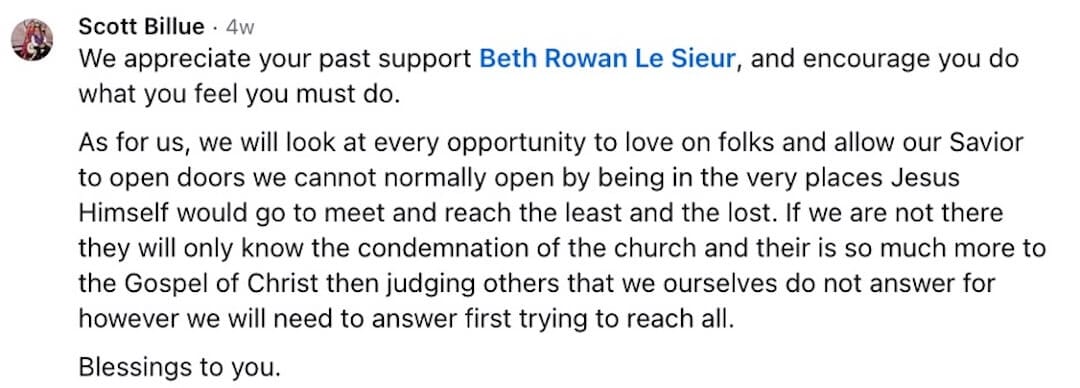
And Billue’s response:
Author's Note: Billue maintains that the door to his office is open for anybody who has questions or concerns about the mission of Matthew’s Hope. For those looking to support an alternative Christian ministry serving the homeless, I suggest Christ Is The Answer Rescue Mission and New Life Mission. Both ministries have a long track record of serving the area’s homeless and reject government funding out of a commitment to keep Christ at the center of their programs. They rely entirely on support from local churches and small donors.
 Connor Mahoney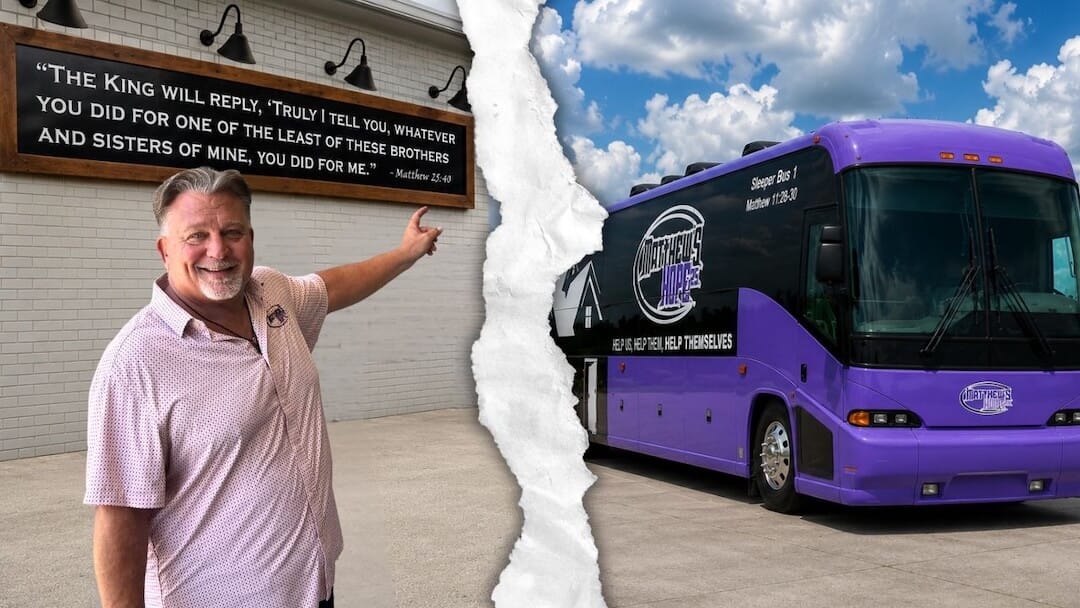
— Connor Mahoney is a Brevard County native and graduate of Florida Institute of Technology. He attends Holy Trinity Episcopal Church in Melbourne.
— Christians of Brevard is a multi-church initiative that seeks to amplify the voices of local churches and ministries for the purpose of encouraging the local body of Christ and advancing the Kingdom of God. Join our Facebook community @ChristiansOfBrevard